My Surveyor Local surveyors identify damp in over 60% of property surveys. Understanding what damp findings mean, the different types of moisture problems, and appropriate treatments helps you make informed decisions about your property purchase. This comprehensive guide explains everything you need to know about damp.
What Is Damp in Buildings?
Damp refers to excess moisture in building materials. It damages plaster, paintwork, and timber, causes unpleasant odors, and creates unhealthy living conditions. Left untreated, damp leads to rot, mold growth, and structural damage requiring costly repairs.
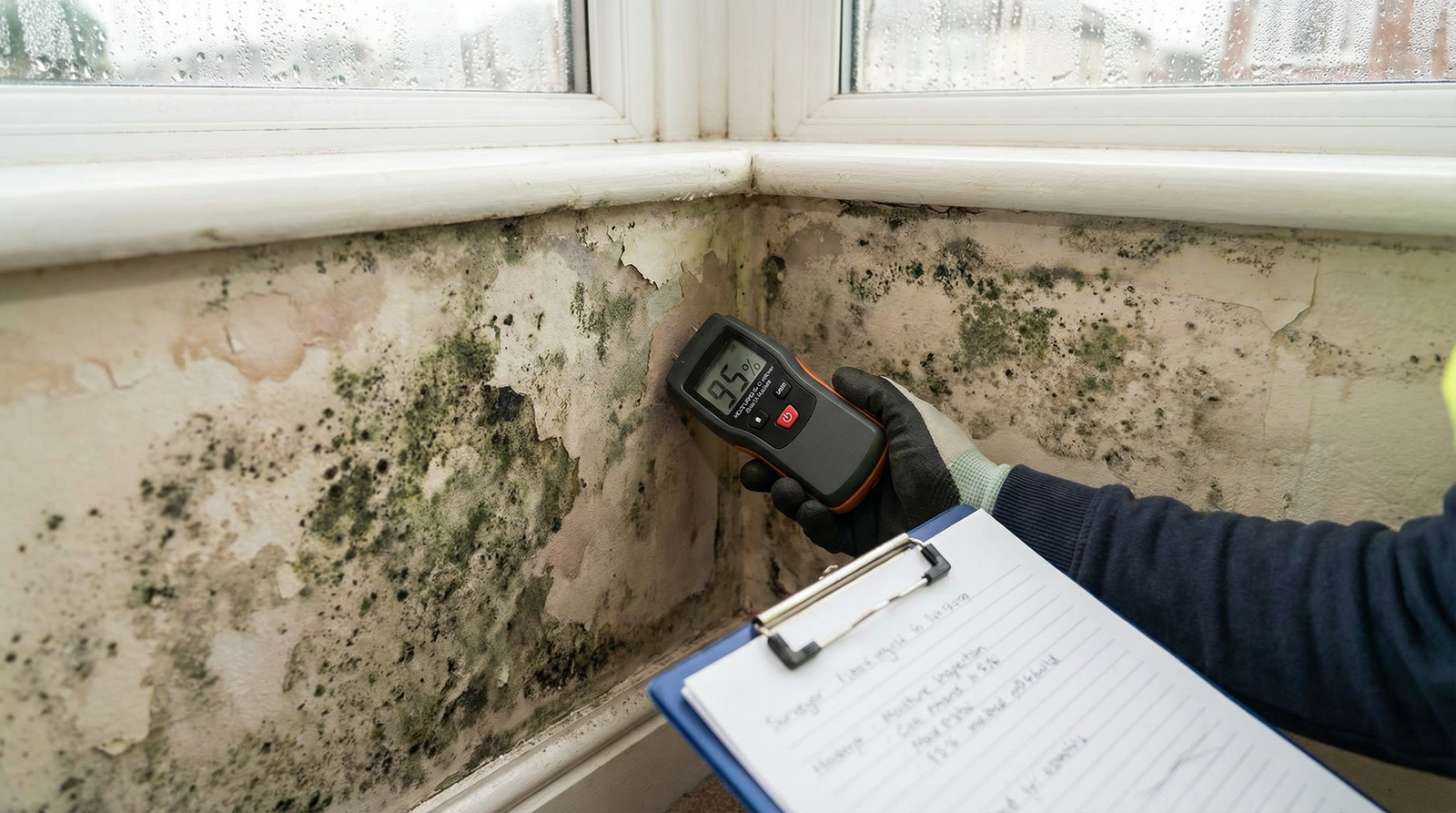
Property surveys use moisture meters to detect damp levels in walls, floors, and timber. Readings above 20% indicate potential damp problems requiring investigation. RICS chartered surveyors identify damp locations, determine causes, and recommend appropriate treatments.
Types of Damp Found in Surveys
There are three main types of damp that surveyors identify:
Rising Damp
Rising damp occurs when ground moisture rises through walls by capillary action. It affects ground floor walls, typically rising to around 1 meter height. Signs include tide marks on walls, damaged plaster and skirting, peeling wallpaper, and a musty smell.
Rising damp happens when damp-proof courses (DPC) are absent, defective, or bridged. Many properties built before 1875 lack DPCs entirely. Modern properties may have failed DPCs due to age deterioration or bridging from raised ground levels or internal cement renders.
Treatment: Installing or repairing damp-proof courses costs £1,000-£3,000 depending on property size. Chemical DPC injection, physical DPC insertion, or remedial work to existing DPCs address rising damp. Replastering affected areas with suitable breathable materials completes treatment.
Penetrating Damp
Penetrating damp enters through external walls, roofs, or around windows from defects allowing water ingress. Unlike rising damp which stays at low level, penetrating damp can appear anywhere, often showing as patches on walls after rainfall.
Common causes include: damaged pointing allowing water through mortar joints, cracked or defective render, missing roof tiles or slates, blocked or damaged gutters and downpipes, defective flashings around chimneys, window and door frame deterioration, and cracked brickwork.
Treatment: Fixing penetrating damp involves repairing the defect causing water entry. Costs vary from £200 for minor repointing to £5,000+ for extensive roof repairs. Surveyors identify causes and estimate repair costs, helping you budget appropriately.
Condensation
Condensation is the most common form of damp, caused by water vapor in air condensing on cold surfaces. It typically appears on windows, in corners, behind furniture, and in bathrooms and kitchens. Mold growth often accompanies condensation.
Contributing factors include: inadequate ventilation, insufficient heating, thermal bridging at cold spots, lifestyle factors like drying clothes indoors, and poor insulation creating cold surfaces where moisture condenses.
Treatment: Improving ventilation through extractor fans (£100-£300 each), increasing heating to maintain warmer surfaces, improving insulation (£500-£2,000 depending on extent), and lifestyle changes reduce condensation problems. Treatment is generally less expensive than other damp types.
How Surveyors Identify Damp
RICS surveyors from My Surveyor Local use multiple methods to identify and assess damp:
Visual Inspection: Looking for obvious signs like staining, peeling paint, damaged plaster, mold growth, and tide marks on walls.
Moisture Meters: Electronic meters measure moisture content in walls and timber. Readings above 20% indicate potential damp requiring investigation.
Professional Experience: Experienced surveyors recognize damp patterns, identify likely causes, and distinguish between damp types based on location, appearance, and building construction.
Accessible Areas Only: Surveyors inspect visible, accessible areas. Hidden damp behind fitted furniture, under carpets, or within wall cavities may not be detected without invasive investigation.
Reading Your Survey Report Damp Findings
When your survey identifies damp, the report explains:
Location: Where damp was detected (specific rooms, walls, floor levels).
Moisture Readings: Meter readings showing damp severity (readings over 25% indicate significant damp).
Likely Cause: The surveyor's professional opinion on what's causing damp based on evidence observed.
Recommendations: Suggested actions, which might include repairs to address causes, specialist damp surveys for severe problems, or monitoring to establish if issues are ongoing.
Urgency: Whether damp requires immediate attention or can be addressed over time.
Common Damp-Related Issues
Damp often occurs alongside other problems that surveys identify:
Timber Decay
Wet rot and dry rot affect timber in damp conditions. Floor joists, window frames, skirting boards, and roof timbers are vulnerable. Timber decay compromises structural integrity and requires prompt treatment.
Wet rot occurs in timber with moisture content above 20%, causing softening and darkening. It stops when damp is eliminated. Dry rot is more serious, spreading even to dry timber through root-like structures. It requires extensive treatment including removal of affected timber and fungicidal treatments.
Mold Growth
Mold thrives in damp conditions, appearing as black, green, or brown patches on walls, ceilings, and furnishings. Besides being unsightly, mold creates health problems, particularly for people with respiratory conditions, allergies, or weakened immune systems.
Treating mold requires addressing underlying damp causes. Simply cleaning mold away without fixing damp allows it to return. Surveys identifying significant mold recommend specialist investigation and treatment.
Plaster Damage
Damp damages plaster, causing it to bubble, crack, and eventually fall away from walls. Salts from damp draw moisture, creating hygroscopic conditions where walls remain damp even after initial causes are fixed.
Replastering with appropriate materials forms part of damp treatment. Period properties benefit from lime plaster, which allows walls to breathe. Modern gypsum plaster suits properties with effective damp-proofing.
Should You Buy a Property With Damp?
Finding damp in surveys doesn't automatically mean you shouldn't buy. Consider:
Severity: Minor condensation or small areas of penetrating damp are easily fixed. Extensive rising damp or serious timber decay require major work and investment.
Cause: Simple fixes like repairing gutters or improving ventilation are inexpensive. Major structural work or extensive damp-proofing costs significantly more.
Cost: Get quotes for treatment costs. Use these to negotiate purchase price or ask sellers to complete repairs before completion.
Your Plans: If you're renovating anyway, incorporating damp treatments into broader works may be practical and cost-effective.
Negotiating Based on Damp Findings
Use survey damp findings strategically:
Get Treatment Quotes: Obtain estimates from damp specialists or builders for addressing problems identified. This provides concrete figures for negotiations.
Request Price Reduction: Ask for purchase price reductions equivalent to treatment costs. Sellers often agree rather than lose sales over damp issues.
Ask for Repairs: Request sellers complete treatments before completion, particularly for serious issues like rising damp or timber rot.
Split Costs: Negotiate compromises where both parties contribute to treatment costs, making transactions work for everyone.
Preventing Future Damp Problems
Once you've addressed existing damp, prevention is important:
Maintain Gutters and Downpipes: Regular cleaning prevents overflows causing penetrating damp. Check twice yearly, particularly after autumn leaf fall.
Monitor Pointing: Repoint mortar joints before they deteriorate significantly, preventing water penetration through brickwork.
Ventilate Properly: Use extractor fans in kitchens and bathrooms. Open windows regularly to allow moisture escape, reducing condensation.
Heat Consistently: Maintain steady low heating rather than intermittent high heating. This keeps surfaces warmer, reducing condensation risk.
Check Externally Regularly: Inspect for cracked render, damaged flashings, or other defects allowing water ingress. Early repairs prevent expensive damp damage.
When to Get Specialist Damp Surveys
Sometimes building surveys recommend specialist damp investigations:
Extensive Damp: Widespread moisture affecting multiple areas warrants detailed specialist assessment with invasive testing.
Uncertain Causes: When surveyors cannot definitively identify damp causes, specialists use advanced diagnostic equipment.
Suspected Timber Rot: Dry rot particularly requires specialist survey with invasive inspection to determine spread extent.
Treatment Guarantees: If you want guaranteed treatment, specialist damp companies provide surveys, treatments, and long-term guarantees (typically 20-30 years).
Damp Treatment Guarantees
Reputable damp treatment companies provide guarantees, typically 10-30 years, protecting you if damp returns. These guarantees are insurance-backed, remaining valid even if the company ceases trading.
When buying properties with previous damp treatment, check guarantees are transferable and still valid. Request guarantee certificates and verify with issuing companies. Valid guarantees add value and reassure future buyers when you sell.
Conclusion
Understanding damp in survey reports helps you make informed property decisions. While damp is common, it's treatable with appropriate interventions. Use survey findings to negotiate, budget for treatments, and ensure you're buying with complete knowledge of any moisture issues.
My Surveyor Local surveyors provide clear explanations of damp findings, helping you understand what problems mean and how to address them. Don't let damp findings panic you – most issues are fixable with appropriate treatments at reasonable costs.
Concerned About Damp in Your Property?
Contact My Surveyor Local to arrange a comprehensive survey that identifies any damp issues and provides expert advice on treatments and costs.
Get Your Free Quote